








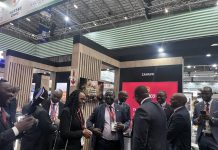
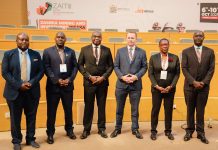

On 15 April 2026, senior Hitachi executives, Zambian government officials, and journalists gathered at Kansanshi Mine in North-Western Province for a showcase of the world’s largest battery electric dump truck – the Hitachi EH4000 AC3. Mining For Zambia looks at what brought this moment about – and what it means for the future of mining in Zambia, and beyond.
***
What is a “battery electric dump truck”?
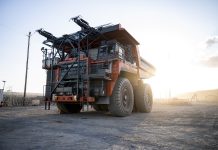
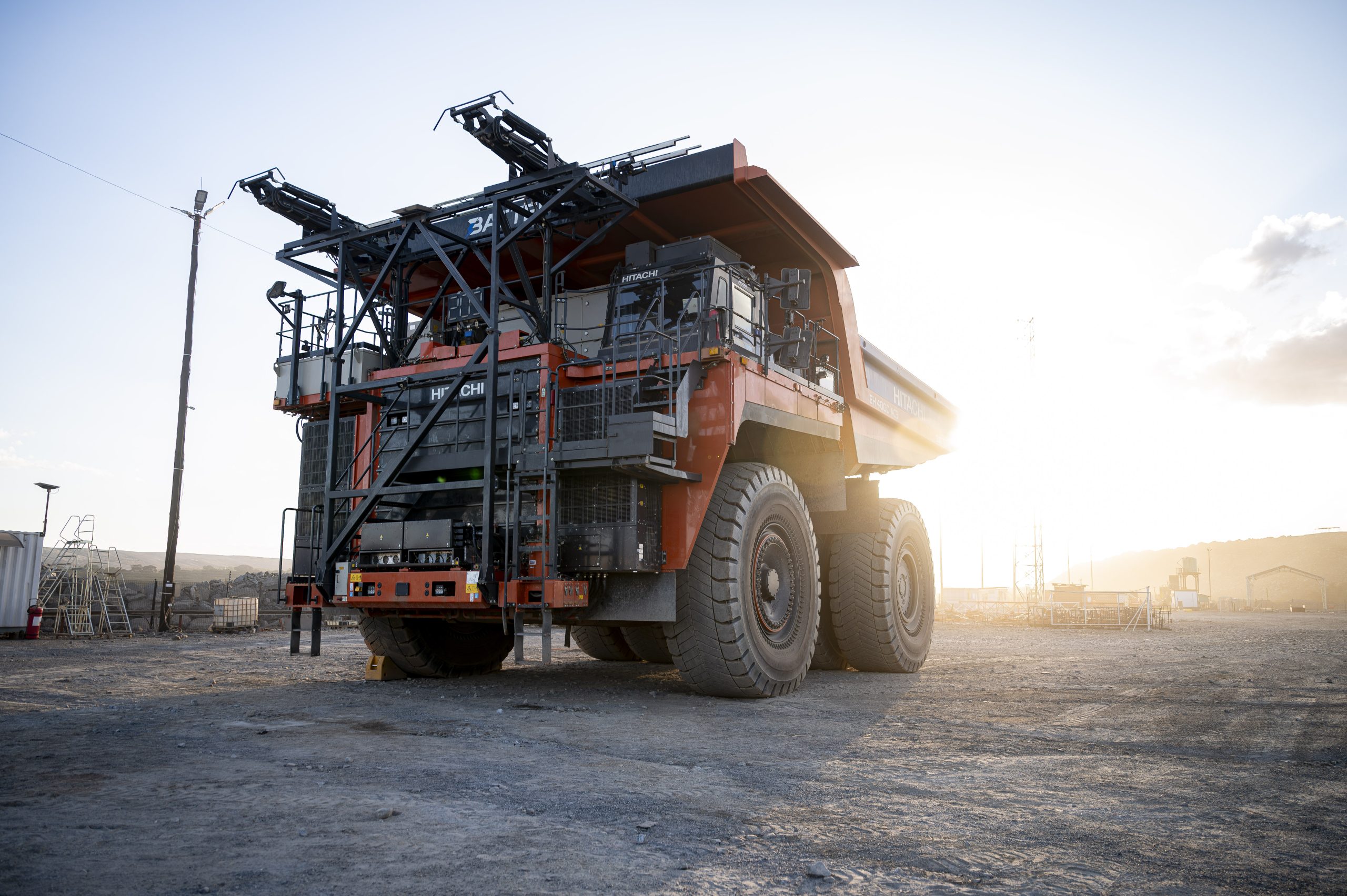
The EH4000 AC3 is, in most respects, identical to the diesel electric Hitachi trucks already operating at Kansanshi. It’s the same size and the same build, with the same 220-tonne payload capacity – making it the largest battery electric vehicle on the planet. The crucial difference is under the hood: where a conventional truck carries a diesel engine worth upwards of half a million US dollars, this one carries a massive bank of batteries and cooling systems. There is no engine at all.
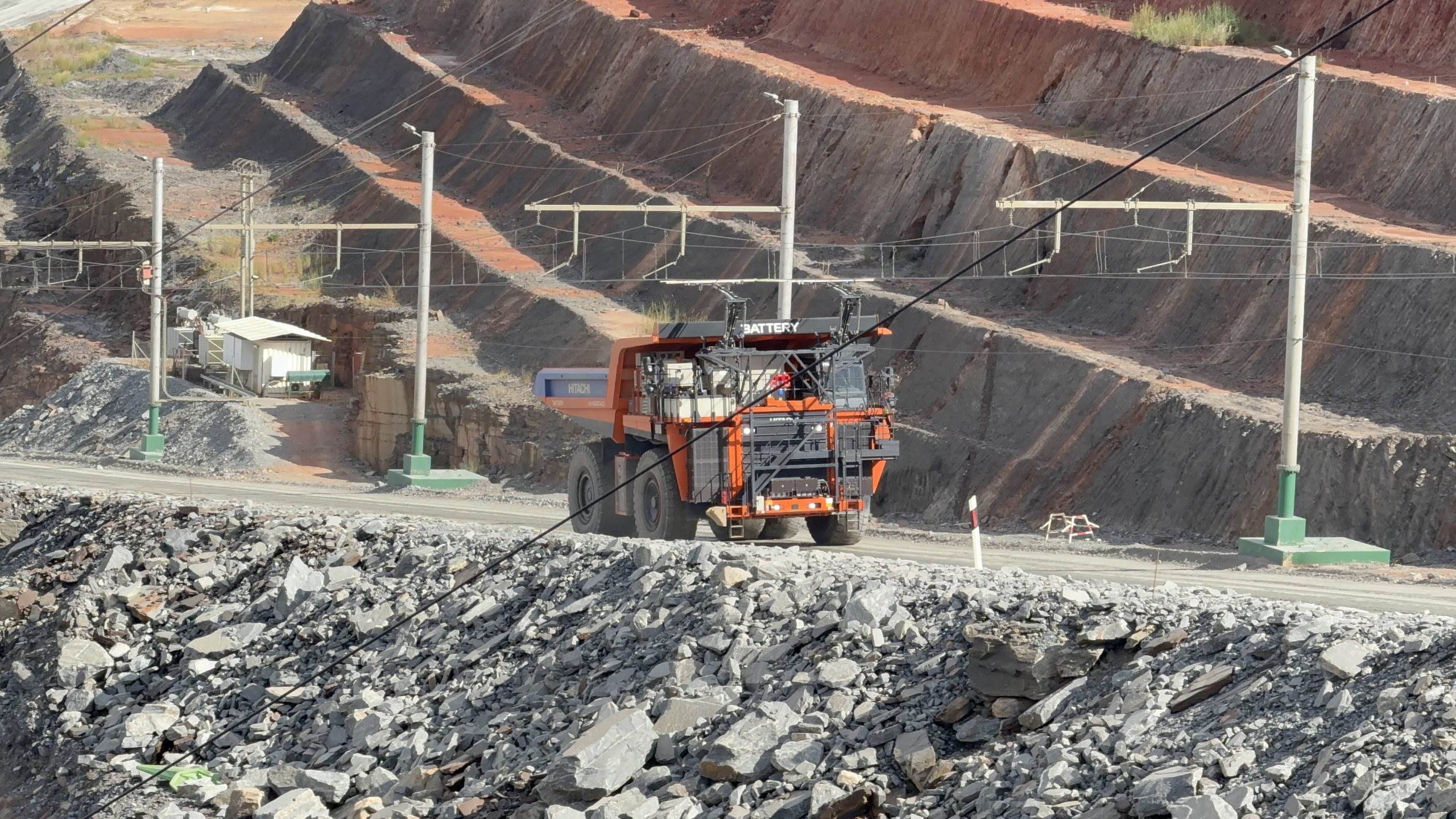
The truck was jointly developed by Hitachi and ABB, the Swiss electrification and automation company. It charges in two ways: through a pantograph – a mechanical arm on the front of the truck that connects to overhead trolley lines while in motion – and through regenerative braking, which recovers energy as the truck descends a ramp and returns it to the battery. “The truck charges going up the haulage ramp, and charges coming back down the ramp,” explained Mr Rees Magrath, Kansanshi’s Mine Operations Manager. When it’s operating away from the trolley line – manoeuvring at the dump or travelling along a mining bench – it simply runs on its onboard battery. Unlike Teslas or other electric cars, it doesn’t use a stationary charging point at all.
Why Kansanshi?
When Hitachi Construction Machinery went looking for a test site for its EH4000 AC3, it wasn’t looking for any mine. It had very specific criteria.
Because the truck charges dynamically, it requires overhead trolley lines. Kansanshi has spent years developing and refining its trolley assist system. It works by utilising electric cables that are strung above haul roads, allowing trucks to draw power directly from the line through a pantograph, reducing or eliminating diesel use on those sections. For that to work at the scale this trial required, a mine needs more than willingness. It needs infrastructure, expertise, and a proven track record of running trolley systems efficiently in a live production environment.
Kansanshi has all of that. First Quantum Minerals first implemented trolley assist at the mine in 2011, making it one of the earliest adopters of the technology in global mining. Today, the mine runs more than 10 kilometres of trolley lines and trolley assist has become, in the words of Mr Magrath, “one of our biggest competitive advantages as an operation.” Hitachi chose Kansanshi not for any single factor, but for the combination: the scale and quality of its trolley infrastructure, the standard of its haul road network, and years of operational experience running dynamic charging systems at high availability and utilisation.
The relationship between Hitachi and First Quantum was also central to the decision. The two companies have worked together for over 15 years across the full range of mining equipment. That history of collaboration, trust, and shared technical development made Kansanshi the natural choice. “FQM’s Kansanshi mine not only has existing trolley infrastructure, but FQM are a leader in the industry with their ability to deploy new or expanded trolley infrastructure,“ said Mr Ray Kitic, Vice President of Hitachi Construction Machinery’s Mining Business Unit.
“This is not a proof of concept in a non-operational mine sense,” said Mr Gordon White, First Quantum’s Director of Mine Operations and Technology. “The BEV is being challenged in a real mining operation.”
The fact that Hitachi chose Zambia ahead of other global jurisdictions is something the country can take genuine pride in.
The energy equation
“The core opportunity is to remove diesel consumption and emissions from mining operations without sacrificing safety, productivity, payload or increasing costs,” Mr White said.
The numbers bear that out. A conventional diesel truck climbing a 10% gradient while hauling a full load burns upwards of 400 litres of fuel per hour, whereas a diesel electric truck on trolley assist reduces that to around 80 litres. A full battery electric truck drawing from overhead lines and charged by renewable energy turns that into zero. And, unlike a truck using trolley assist, it isn’t tethered to the line. It can go anywhere the battery allows.
Zambia’s energy mix makes this a particularly compelling case for decarbonisation. With almost 85% of the country’s electricity generated by hydro power, Zambia is better placed than almost anywhere else in the world to make it work.
A conventional diesel truck climbing a 10% gradient while hauling a full load burns upwards of 400 litres of fuel per hour. A diesel electric truck on trolley assist reduces that to around 80 litres. A full battery electric truck drawing from overhead lines turns that into zero.
How the trial worked
The EH4000 AC3 arrived at Kansanshi in January 2024 and was assembled on site. The trial that followed was deliberately phased. It began with basic forward and back drives on a flat pad at the workshop – with the truck painted a distinct colour so that everyone on site would immediately recognise it as something new and different. Over weeks and months, it was gradually integrated into the live fleet.
That process required adaptation across the mine. Operators, maintenance teams, mine planners, and the Minerals Regulation Commission – the government body overseeing health and safety in mining – all had to engage with a technology that no one had encountered before. New risk assessments were drawn up: high-voltage lock-out procedures, battery management protocols, and the possibility – however rare – of an electrical fire rather than a fuel-related one. Emergency response teams worked through exactly how they would respond, including what fire suppression products are effective on a battery system.
“The human being is one of the biggest levers and risks to any change management. We were fortunate that we had a lot of people who were really keen to see this change happen – and as a result, it was fairly seamless to bring something in that was just so unknown to everyone,” Mr Magrath said.
The truck was eventually running in full production cycles alongside Kansanshi’s diesel electric fleet. It matched its conventional counterparts on payload and operability – and proved considerably quieter, making for a more comfortable operating environment. On flat surfaces, performance was equivalent. On ramps, where the battery and drive wheels currently compete for the same energy from the overhead line, the truck is somewhat slower than its diesel electric counterpart – and closing that gap is the focus of the next phase of development.
“The lessons learnt from harnessing regenerative braking have been meaningful,” Mr White noted. The first phase of the trial – verifying that the truck could operate safely and effectively in a real mining operation – has been a success. What comes next is about proving it can match, and eventually surpass, its diesel counterpart in every measurable dimension.
What the journey to electric haulage means for Zambia’s mines
The transition from diesel to electric haulage is not a switch that gets flipped. It is, as Mr Magrath described it, a journey – one that Kansanshi began more than a decade ago with the first installation of trolley lines, and which is now reaching a new frontier.
That journey changes the skills a mine needs. Fleet electrification does not reduce the number of people required – it expands the range. High voltage electricians, power systems engineers, data and diagnostic specialists, HVAC technicians managing battery cooling systems, mechatronics and instrumentation engineers: these are roles that barely existed in mining a generation ago. “The range of people on a mine site today is just so much broader than it’s ever been,” Mr Magrath pointed out. Kansanshi has already lived through one version of this transition – the introduction of autonomous drilling at FQM’s Trident mine – and the pattern holds: not replacement, but evolution.
“It all goes back to that non-negotiable: haulage needs to be efficient for the operation to be successful,” Mr Magrath added.
Fleet electrification does not reduce the number of people required – it expands the range.
For Zambia, the significance runs deeper. The showcase represented more than a commercial milestone – it reflected a convergence of government, industry and technology partners around a shared agenda. Mr Tristan Pascall, FQM’s CEO, described the project as the result of years of research, development and collaboration between all three, noting that it placed Zambia at the forefront of global mining technology. That alignment extends to workforce development: approximately 96% of FQM’s workforce in Zambia is made up of Zambian citizens, including at senior management level.
The country is already ahead of most mining jurisdictions in the world in the practical adoption of battery electric haulage at scale. That positioning matters as global demand for copper – and scrutiny of how it’s produced – continues to grow. End consumers and investors increasingly want critical minerals extracted responsibly, with genuine reductions in emissions and fossil fuel dependence. Operations that can demonstrate exactly that will have an advantage.
“Zambia has adopted this technology ahead of other jurisdictions in a real mining operation,” Mr White said. “This is a credit to the country and its regulators, which positions itself at the forefront of a new technology that can potentially change the mining landscape.”
Permanent Secretary at the Ministry of Mines and Minerals Development, Mr Hapenga Kabeta, echoed that sense of national significance at the showcase. “As Government, this partnership is one which we are very proud of, as it puts Zambia on the map as a leading mining destination where technology is at the frontline of success,” he said.
“There’s been a perception that going electric means compromise: compromise on productivity, reliability, or cost. What we have demonstrated here in Zambia is that it doesn’t have to be the case,“ Mr Kitic said.
Hitachi’s decision to trial its most advanced machine here was not an accident. It was a reflection of what Kansanshi – and Zambia – have spent years building.
See also: Local content isn’t always local: Hitachi in Zambia

Great development there