











Zambia’s Government has long grappled with finding ways to increase local participation in the country’s economy. On 1 January 2026, with the introduction of Statutory Instrument (SI) No. 68, a ‘top-down’ approach to Local Content in the mining sector was formally implemented for the first time. It requires mining and mining-related companies to meet a series of very ambitious targets, including reserving 100% of all ‘non-core services’ – from catering to security and haulage – for local companies. On 15 April 2026 – just three months since the SI was put in place – companies in the sector will be required to submit compliance reports to Zambia’s Ministry of Mines and Minerals Development.
What many Zambians do not know, however, is that this is not new ground. Long before SI No. 68 was implemented, Zambia’s largest mines have been doing precisely this: working with local suppliers wherever possible, nurturing new ones, investing in education and supplier development programmes, and developing the skills and infrastructure needed to build a genuine local supply base.
In this article, we take stock of the situation on the ground by looking at the ways in which mining companies have been steadily moving towards these goals over the last decade. We also take a step back and consider the importance of local participation in its many forms.
***
Handvic’s steps to success
The Zambian-owned Handvik Investment Limited’s partnership with the FQM-run Kansanshi Mining Plc is one example of what organically increasing ‘local content’ looks like in practice.
Handvik began operating in 2009 with a single employee. In 2011, when Kansanshi was looking for vehicle hire services, it registered as a supplier. “We seized that opportunity and delivered a reliable service, which helped us build trust,” said Handvik’s Director Manager, Mr Victor Muyelu.
A three-year contract for mining and construction equipment hire followed. Today, Handvik employs more than 300 people. Crucially, the company won that first contract years before any statutory instrument or local content quota motivated Kansanshi to hire them. They won it by being competitive.
Companies like Handvic are role models for many a Zambian entrepreneur but, as their story suggests, there are no shortcuts to success. Without the opportunity to grow with and alongside Kansanshi – incrementally providing more services, and steadily proving themselves to be a reliable partner – the growth of Handvic’s business is unlikely to have evolved in a sustainable way.
Building an ecosystem
Three months since the SI’s introduction, mining companies across the country have been working hard to fill any necessary gaps. But crucially, they must strike a balance between doing what they can to comply with new quotas and ensuring they don’t slow the mineral production on which Zambia’s economy so heavily depends.
“Many mines are going flat-out to demonstrate that they’ve done everything in their power to meet these milestones,” said Mr Andrew Chibuye, Country Senior Partner at PwC, speaking at the Investing in African Mining Indaba in February. Several mining companies, he noted, are offering vendor financing arrangements to help local suppliers secure business in the sector.
Once a supplier has won business and secured an offtake agreement with a mine, that typically gives financial institutions the assurance they need to consider providing structured finance or other support. This was the case with Kascco Limited, a major mining contractor in Zambia that supplies heavy equipment across four operational sites, including FQM’s Sentinel Copper Mine.
Through a partnership with Stanbic Bank Zambia, the company received structured finance to expand its mining equipment. Stanbic Bank Zambia has played a big role in helping Kascco grow from a small equipment hire company in 2005, into a company that employs over 1,500 people, and empowers many more through its supply chain. Today it is Zambia’s largest mining service provider.
‘Local content isn’t always local’
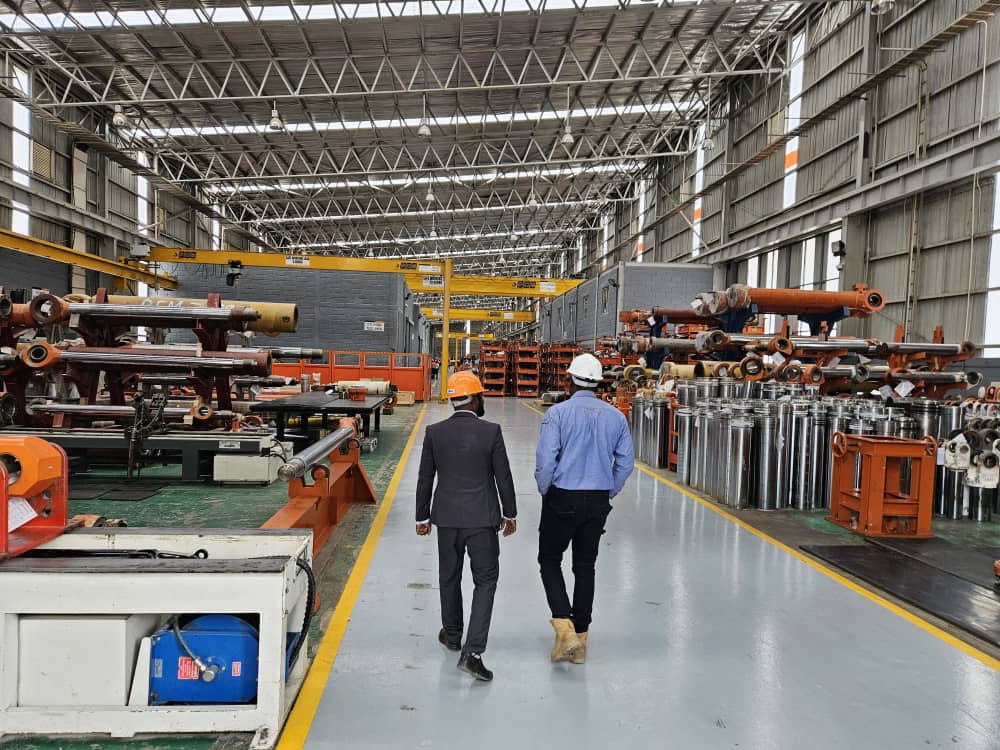
A different kind of local content story unfolded in June 2025, when President Hakainde Hichilema officially opened Hitachi Construction Machinery Zambia’s expanded Remanufacturing and Engine Facility in Lusaka Province. It’s a $25 million investment that came about directly because of Hitachi’s strong 15-year relationship with Kansanshi Mine.
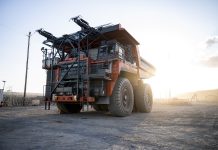
Previously, when a dump truck engine failed, it had to be sent to South Africa for rebuilding – a process that took several weeks and cost the mine significant downtime. Now the entire process can take place in Zambia. The Remanufacturing and Engine Facility will create over 100 specialised jobs and, because it draws in equipment from neighbouring mining countries – including the DRC and Mozambique – it positions Zambia as a regional hub for high-value industrial services.
The creation of the Hitachi facility is significant beyond the jobs and investment figures. It’s the result of consistent, long-term demand from a world-class mining operation – demand that eventually made a major capital investment in Zambia commercially viable for a global company. President Hichilema spoke at the facility’s launch about the mining sector’s contribution in terms of “job creation, skills development, and increased participation of Zambians in the value chain.”
This distinction – between local content that grows organically from real commercial relationships, and local content that is mandated from above – matters.
‘Out-of-the-box’ local content
Local content is not a single thing. It encompasses the sourcing of goods and services from local companies, the employment of local workers, the transfer of skills, investment in supplier development, and the growth of value-added industries that process minerals or manufacture goods rather than simply importing them.
The Kalumbila Multi-Facility Economic Zone (MFEZ), designated in 2022 in North-Western Province, illustrates this broader vision particularly well. Designed to sit adjacent to – rather than within – FQM’s Trident Project mines, the MFEZ offers incentives including duty-free capital equipment imports and profit retention on exports for new businesses. Its explicit goal is value addition: encouraging companies to manufacture or process goods locally rather than import finished products.
Mr Lawrence Makumbi, a North-Western Province based supplier of mining equipment and services who’s supplied Sentinel mine since it opened, captured the aspiration: “Most of the stuff we use at the mines comes from South Africa. I’d like to get to the point where, instead of buying finished products, I buy raw materials and start making this stuff here.”
Mr Lawrence Makumbi, a North-Western Province based supplier of mining equipment and services who’s supplied Sentinel mine since it opened, captured the aspiration: “Most of the stuff we use at the mines comes from South Africa. I’d like to get to the point where, instead of buying finished products, I buy raw materials and start making this stuff here.”
The ripple effects of that shift, he says, are the real prize. “Transporters will need to come in (…) hardware suppliers – all of those are spillover jobs that will go to Zambian suppliers. There will be more jobs created, there’ll be more money in circulation – and more workers means more taxes for Government.”
‘Best practice’ in the industry
At the 2025 Zambia Mining and Investment Insaka, discussions between industry and government reflected the same spirit: increasing local content and developing value addition in-country requires an ecosystem – not just willing buyers and sellers, but business developers, access to finance, skills pipelines, and public-private collaboration.
If increasing economic participation in the sector is the goal, Zambia can learn from Chile’s successful approach, which focuses on targeted incentives to encourage local business participation and improve knowledge transfer and innovation, rather than rigid quotas, according to the World Bank.
Chile’s Mining Skills Strategy brought together 12 large mining companies, major suppliers, training institutions, and government ministries to forecast workforce needs and justify public investment in education. The result was a collaborative, market-responsive approach to local economic participation – one that built real capability rather than paper compliance.
Martin Lokanc, Senior Mining Specialist at the World Bank, has been one of the clearest voices in recent years on what well-designed local content policy needs to achieve.
Speaking last April about the World Bank Group and the Government of Zambia’s jointly created ‘roadmap’ – Repositioning Zambia to Leverage Energy Transition Minerals for Economic Transformation: A Roadmap – Mr Lokanc pointed out that “promot[ing] local supplier development and adopt tried and tested ‘local content’ policies that enable SMEs to create backward and forward linkages” will be key in creating an ecosystem that supports both value addition and a higher degree of local participation.
But Lokanc also brings a caution. Speaking at a panel discussion at this year’s Mining Indaba he warned that, without clarifying the precise objectives behind Local Content policies, there can be unintended – and often undesired – consequences. One of them is increasing local ownership on the surface, even if that comes in the form of “middlemen” who essentially import goods without adding value. “Every government has to start by asking themselves, what is the objective? Is it just about national ownership of supplier companies, or is it about actual value addition happening in countries? Would you trade one off for the other?” he asked.
It’s a question worth sitting with as Zambia’s mines prepare to submit their first reports under SI No. 68 – and Zambia is not alone in grappling with it. Across the continent, a wave of national legislation since 2024 has sought to capture more value from mineral resources – through export restrictions, local processing mandates, and procurement thresholds.
Zambia Chamber of Mines CEO Mr Sokwani Chilembo, also speaking at this year’s Mining Indaba, framed the challenge as a need to “hold course” while continuously improving the jurisdiction’s competitiveness. Zambia needs to strike “a balance between tightening regulation and compliance with the requisite caution and care that keeps mining growing, attractive, stable and competitive,” he added.
The targets have been set. The reporting has begun. What happens next will depend not just on whether mines meet the numbers, but on whether the numbers, in time, translate into the kind of durable, skills-rich, value-adding local economy that Zambia has long been working towards – one supplier, one factory, one skilled mechanic at a time.
See also: The businesspeople of North-Western’s future

Alright
Now north western province has lot of job seekers i.m one of them I was working with security company in the kansanshi mine I worked for 7yrs waiting to be called by kansanshi mine department Upton now I even stopped working in the security department waiting for you to called me help me