










In the last five years, Zambia’s mining sector has changed course, and all because government policy began creating an environment that enabled – not discouraged – investment.
In this article, Mining For Zambia speaks with mine operators and stakeholders with firsthand experience of the changes that have transformed the sector, and asked them to reflect on what exactly Zambia’s mining industry has achieved in the last five years. And, as Zambia heads to the polls in August, how could the next Government build on – and compound – these successes?
From intensive care to $12 billion
Before the current administration was elected in August 2021, Zambia’s mining sector was in “intensive care,” as Phesto Musonda, Board Chair of ZCCM-IH put it. “However, by providing the policy stability necessary to attract growth, the mining industry is now at last in good health again,” Mr Musonda explained. “For the first time, Zambia is anticipating one million tonnes’ copper production in 2026.”
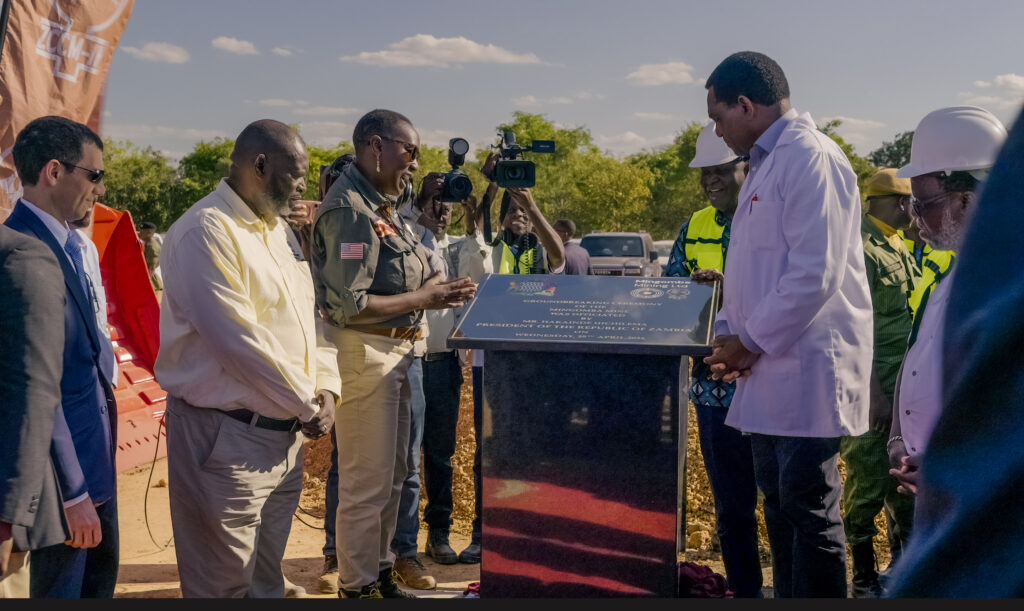
Existing operations have been rejuvenated, and new faces are starting to appear. KoBold Metals Africa CEO Ms Mfikeyi Makayi reflected on what Zambia’s current investment climate has made possible in Mingomba.
“Three and a half years ago, we were a new Zambian company with 10 people. Today, we have over 800 people working here at the site of this new mine.”
What’s made this turnaround possible is confronting several challenges in parallel: tackling an unsustainable debt burden, while simultaneously bringing mining tax rates back into competitive territory. The rule of law has also been restored to a sector where security of tenure had been badly shaken.
A $12 billion wave of investment commitments is the result: from Kansanshi Mining Plc’s $1.25 billion S3 expansion, to Barrick’s $2 billion Lumwana Super Pit Expansion, CNMC’s $1.3 billion investment to restart Chambishi and Luanshya mines, the recapitalisation of Mopani (MCM), and the emergence of major new entrants including KoBold Metals at Mingomba. Furthermore, having earlier pledged to invest $1 billion to revive and expand Konkola Copper Mines (KCM), Vedanta Resources has just announced that it intends to raise and invest a full $2.7 billion to triple KCM’s copper output by 2031.
What were the key actions that have encouraged this investment wave?
“The first key action that the new Government took was reducing the average effective tax rate in line with our main competitors like the DRC, enough to spur the growth we’ve seen,” said Mr Chilembo. “But, if we are to become truly globally competitive – or even regionally competitive – we need it to come down more. Our average effective tax rate is still above South Africa’s, which is a key source of capital in its own right, and the mining companies of the Johannesburg Stock Exchange are Wall Street’s preferred conduit for capital onto the continent. If we don’t have average effective tax rate parity with South Africa, we will not get the full thrust of what Wall Street intends for the continent.”
Mr Anthony Mukutuma, First Quantum Minerals’ Country Director for Zambia, agrees. “Is the operating environment now perfect or without faults? Certainly not. But we see our regulatory and fiscal regimes becoming more aligned with other mining jurisdictions – in changes such as MRT being tax-deductible, and the Minerals Regulations Commission Act of 2025 replacing the Minerals and Mining Act of 2016. The latter provides a neat one-stop shop for mining companies coming into and operating in Zambia.”
“The first key action that the new Government took was reducing the average effective tax rate in line with our main competitors like the DRC, enough to spur the growth we’ve seen.”
What does stability look like on the ground?
A clear illustration of what stability has made possible – and what its absence nearly cost – is the S3 expansion at Kansanshi Mine. It was years in the making; it was also years delayed.
“The S3 expansion was deferred in 2013 following multiple adverse changes to the fiscal and mining policy regimes over a sustained period of time that continued into early 2020,” said Mr Mukutuma.
Without S3, Kansanshi would now be producing at roughly half its volumes of a decade ago – and facing closure within a few years.
“S3 has secured the Kansanshi revenue line for FQM and the Government of the Republic of Zambia for another 20-plus years,” said Mr Mukutuma. “Its contribution to the 2026 Kansanshi production guidance is about 80,000 tonnes of copper. That’s 39-40% – not insignificant.”
“S3 has secured the Kansanshi revenue line for FQM and the Government of the Republic of Zambia for another 20-plus years.”
What does this kind of investment deliver beyond the mine itself?
The answer is visible across Northwestern Province.
“If you look at Solwezi and Kalumbila in particular,” said Mr Mukutuma, “what you see is the impact of the mines on the economies of these towns and, more broadly, the province – which otherwise would have remained largely under-served. Income to people working for the mines, companies providing goods and services to the mines, land rates to the local municipalities, and corporate tax and mineral royalties to the central government – all these contribute significantly to the local economy and improving or building infrastructure. The growth and development of Northwestern Province is intrinsically linked to the presence of mining operations such as FQM and others operating in the area.”
We’re seeing a similar spark once again on the Copperbelt. Speaking about Mingomba’s growing footprint around Chililabombwe, Ms Makayi observed: “The reinvigoration of the mining sector has had a knock-on effect on other sectors, and has brought so much hope and excitement back. We struggle with finding accommodation in Chililabombwe and Chingola – this is a signal for the domino effect of economic opportunities that lie for entrepreneurs here.”
Investment confidence, it seems, isn’t only showing up in new mines and expansions. Mr Chilembo pointed out: “Zambia is back at the forefront of the application of new technology. We’ve had First Quantum and Hitachi trialing their EV dump truck. Orica, the explosives company, has upgraded their local factory in Chambishi to the most cutting-edge technologies across the globe, and China Nonferrous Metals Corporation has commissioned the first tunnel-boring underground mining machine on the continent. This is what comes when your risk and cost of capital begin to drop – when people have confidence. These innovations accelerate the production rate, so there’s a domino effect.”
“The reinvigoration of the mining sector has had a knock-on effect on other sectors, and has brought so much hope and excitement back. We struggle with finding accommodation in Chililabombwe and Chingola – this is a signal for the domino effect of economic opportunities that lie for entrepreneurs here.”
The ZCCM-IH transformation
Zambia’s state mining investment vehicle, ZCCM-IH, has used the improved investment climate to restructure its portfolio in ways that now generate income regardless of commodity price cycles. “The defining moment – which we are so proud about – was converting our dividend rights in the Kansanshi mine into a 3.1% gross revenue, life-of-mine royalty,” said Mr Musonda. “Since 2022 we have accumulated $110.6 million – including through 2023 and 2024, when Kansanshi declared no dividends.”
The same reformist instinct that reshaped the mining fiscal regime extended to the energy sector. Government opened the electricity market to independent power producers – creating conditions for ZCCM-IH to invest directly in generation capacity. The results have been commercially significant. “The current administration unlocked Maamba Energy Limited – it was owed more than $300 million by Zesco at the time,” said Mr Musonda. “Because of the encouragement and the reforms that President Hichilema drove, Zesco has paid all this debt. That is why Maamba – in which ZCCM-IH is a 35% shareholder – is able to pay dividends now.”
The three million tonne question
The progress of the past four years is real, and its foundations are solid. The question now is whether Zambia can build on them decisively enough to realise the full scale of its ambition. The Government’s target of three million tonnes of copper production annually by 2031 – more than three times current output – is certainly ambitious, and getting there will require more than momentum.
Mr Mukutuma is clear about what the target demands: “The aspiration to get to three million tonnes of production by 2031 must be backed by new mines. The metric or scorecard policymakers use to assess progress towards the three-million-tonne annual target should not be today’s production, but exploration instead. We must increase the nation’s mineral resource inventory. I cannot emphasise this enough.”
The arithmetic is straightforward. Zambia’s existing mines, running at full capacity, can produce a maximum of 1.6 million tonnes per year. But every tonne mined is a step closer to the end of a mine’s productive life. So reaching three million tonnes is not a matter of optimising what exists – it requires a pipeline of new mines. That pipeline begins with exploration, to find the deposits that could one day become an operating mine. But the gap between Zambia’s current exploration levels and that of comparable jurisdictions is stark.
“Canada leads in absolute copper exploration spending, averaging well over $3 billion per year – four to five times more than the DRC, and over ten times more than Zambia,” explained Mr Mukutuma.
Building a resource inventory large enough to sustain three million tonnes annually for decades is not a one-year undertaking. The work must start now.
Ms Makayi frames it as a collective endeavour: “Collaboration will advance our collective progress to increase production to three million tonnes copper, but also diversify into other commodities. We need to explore effectively, and we need to leverage modern technology. This is how we will achieve these goals.”
Part of the answer may lie in how exploration itself is financed. Mr Chilembo points to a mechanism that does not yet exist in Zambia: the flow-through share (FTS) mechanism, under which an explorer’s expenses can be assigned to an investor in exchange for equity, making exploration spend tax-efficient, and opening it to a far broader pool of capital. “Much of Canada’s exploration is financed via a flow-through share mechanism. If this mechanism can be set up in Zambia, our pipeline could grow fast enough – the virtuous cycle is complete.”
From good to great: regulatory coherence and compliance
Exploration financing is just one piece of the puzzle. Another is the regulatory environment in which exploration and mining take place. Fiscal stability has been achieved – but the risk of regulatory instability offsetting it remains real. In recent years, a series of individually well-intentioned regulatory changes, driven by different arms of Government, have cumulatively increased the cost of doing business in ways that no single agency has been tasked with measuring. Mr Chilembo articulates both the problem and the solution:
“It would be brilliant if we could finally get all the regulations and laws into just one compendium which businesses or investors receive when they come to the country. But to get there, we need more detailed impact assessments, and a strengthening of the Business Regulatory Review Agency and Public-Private Dialogue Forum processes. That’s the gateway and it’s something we need to deal with urgently – otherwise our lunch will be stolen. We’ve been looking at each action in isolation, but all of this must come together at a higher level.”
And through the public-private dialogue forum, he added, Government has demonstrated that it can legislate thoughtfully: “We’ve been able to work through key legislation such as the Minerals Regulation Commission, the Geological and Minerals Bureau, and the Local Content statutory instrument – and having a transparent and consensus-based process has led to better policy stability. A lot of credit goes to Government for continuing to incentivise the sector under the extreme duress of the debt situation, with the Minister of Finance removing duties on capital equipment imports into mining operations.”
Mr Chilembo says that the next Government needs to continue to improve compliance countrywide, including environmental, social, safety, and tax compliance.
“The Minerals Regulation Commission needs to be nationally present but locally felt – you have to really feel that there’s a risk of being caught and sanctioned,” he said.
Mr Mukutuma added: “The next Government should review the licensing framework to ensure licence holders comply with the licences issued and inactive licences are revoked to open up ground for new investment. This would take away one of the major encumbrances to investment in exploration.”
The stakes are high, and Zambia’s risk premium is still in double digits. “Tight regulation will further drop the country’s risk premium – and once you get that drop, even the cost of implementing power infrastructure projects drops,” said Mr Chilembo. “It will have a domino effect.”
“Tight regulation will further drop the country’s risk premium – and once you get that drop, even the cost of implementing power infrastructure projects drops,” said Mr Chilembo. “It will have a domino effect.”
Value addition and power go hand in hand
The aspiration to move beyond raw copper exports – to process, refine, and manufacture on Zambian soil – is widely shared, and often discussed. Mr Mukutuma explained that incentivising investment in energy is key to moving Zambia into a middle-to-high income economy.
Mr Musonda also pointed out that value addition was dependent on having plentiful electricity.
“In the initial stages, we can import the skills and bring the technology. What should be locally available is electricity and raw materials – and we must have those.”
This is a prerequisite that cannot be skipped. “We need to focus on building interconnectivity to the Southern African and East African power pools, increasing hydro generation in the northern watershed, and diversification of energy sources,” said Mr Chilembo. “It is worthless talking about value addition unless there’s a surplus of power.”
Zambia is not yet in that position, but the direction of travel is right. “We don’t expect to add value to everything overnight,” offered Mr Musonda. “We have to go systematically, step by step, learn useful lessons, and adjust accordingly.”
The road ahead
Stakeholders on the ground view Government’s achievements as a restoration of order, credibility, and long-term thinking in the stewardship of Zambia’s most important economic sector. The task for whoever governs next is to hold course.
“The policy direction of the last four years has been clear, sequenced, and credible to capital markets,” said Mr Musonda. “What the sector needs from here is institutional follow-through – delivery against the plan that has been set out. That is what compounds.”
Mr Chilembo added: “When you get these things right – corridors, infrastructure add-ons, local content – everything else begins to make more sense in that growth environment.”
See also: ‘Holding course’ to get our minerals out the ground