


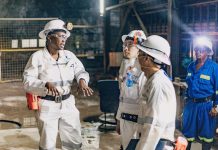
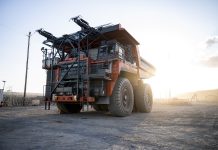






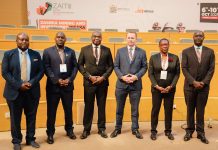


KoBold Metals breaks ground on the Mingomba Mine near Chililabombwe in Zambia’s Copperbelt Province on 29 April 2026. The project is targeting 300,000 annual tonnes of copper by the early 2030s, in a significant contribution to Government’s three million tonne target.
In Part 3 of this exclusive interview with KoBold Metals Africa’s CEO, Ms Mfikeyi Makayi reflects on Mingomba’s contribution to Zambia and her journey to get where she is today, and offers advice for those hoping to succeed in the mining industry.
***
In an interview with Mining For Zambia, Josh Goldman talked about what he expects the Mingomba project’s contribution to Zambia to be, mentioning a) employment and b) a contribution to Zambia’s national objective to increase copper production to three million tonnes annually. Do you have anything to add to the contributions that you hope to see KoBold make to the country?
Josh’s responses sum up the company’s contribution to Zambia. Taxes will be another major contribution to Zambia. But it’s important to note that, when people think about employment, it’s more than direct jobs at Mingomba. It’s also all the indirect economic activity and opportunities and services required to support operations – from Information and Communication Technology, to Fast-Moving Consumer Goods, to transportation, construction, housing, education, utilities – and this collective increase in purchasing power will cascade across industries and increase the taxpayer base.
This is a multi-decade venture that will have many stakeholders in the conversation, and it’s going to be transformational for the town of Chililabombwe. Mingomba’s contribution speaks directly to economic growth, and it’s important to stress that.
Investing in education also seems to be a big priority for KoBold. Tell us more about the partnerships that the company has set up with local and international institutions, and how they will help to cultivate talent and prepare Zambians for the workforce.
A modern mine will require a lot of automation to run efficiently and profitably. Automation potentially means doing more remote work with machines. It’s kind of like the changes we saw from the agricultural revolution into the industrial revolution.
We’re at the phase in the world where data and datasets are a major lever in many science and business decisions, in our case exploration decisions. It’s important to consider what that means for a geologist of today and what skills they need to have.
KoBold has established a partnership through Stanford University and the Copperbelt University, and the University of Zambia. We want to make sure that the geoscientists and geologists who will be graduating in the next couple of years are taught master’s degree-level data science and geoscience to enable industry fundamental transformation on how we can learn more about the earth’s geology.
Directly in Mingomba’s community, literacy levels and teacher to pupil ratios are not where we need them to be. With such a youthful African population, we have to think of kids who are going to be university graduates and tradesmen in the future. We risk having a large youthful workforce that isn’t prepared enough skills-wise, and that will affect the rate of economic transformation. Projects become slower to deliver.
It really starts with policy, and the conversation has to happen now: at a private sector, company, and university level. Partnering with Stanford is also helping Zambian lecturers understand how companies like KoBold that are doing a lot of innovation can help Zambia to catch up with the rest of the world. We’ve seen this technology race happening at a global level but here in Africa, what are we doing about it? The humans will be there, but will they have the skills?
We are supporting 10 students from the University of Zambia and the Copperbelt University, who will be co-taught by Stanford staff at a master’s level. KoBold is sponsoring the students and has an advisory role in this. The program commenced in January 2025.
“Partnering with Stanford is also helping Zambian lecturers understand how companies like KoBold that are doing a lot of innovation can help Zambia to catch up with the rest of the world. We’ve seen this technology race happening at a global level but here in Africa, what are we doing about it? The humans will be there, but will they have the skills?”
Our internship program also helped us find 11 brilliant young Zambians in various fields who rotated end-to-end across the business. They all had additional training in financial literacy, coding with Python, public speaking, and other self-development training. Honing future talent and actively providing mentorship is something we want to engrain in our day-to-day business.
We also have a more recent partnership with research professors at the University of Zambia and the University of California, Berkeley, through which KoBold is funding independent research institutions called the CEGA project (Center for Effective Global Action). The research will be focused on the socioeconomic and financial impacts that mining in Zambia has on individuals, households and nearby communities. Often mines do CSR and in-house reports and impact check – but we are approaching this with deep academic expertise, independent of KoBold’s opinion, and Mingomba gets to be a seed for this.

Upon accepting the position as CEO, you said in an interview: “Mining is something that will drive our economy into the future if we get this right.” What do you mean by that?
I mean that this will require a collective effort from every stakeholder affected. That includes everything from Governments – with stable policy and good governance – to private sector-driven activities that create real value and growth.
It also includes the healthy human resources required for labour and skills, the education sector that’s preparing the mining talent of the future by integrating technology, the communities we reside in and their social development, and the media – who are the voice for transparency and justice in the industry.
Mining is needed by everyone, that’s a fact. Think about every piece of material we have: if it’s not grown naturally, it’s mined.
In Part 1 of this interview, you mentioned some of the lessons that you’ve gained during the course of your career – including your view that becoming a leader is “a mindset” and “a continuous and highly iterative process.”
Can you speak more about your journey in the mining sector – from FQM Kansanshi, to Barloworld, and KoBold – and how each of these eras shaped your path into leadership and management?
I started out in the maintenance section of Kansanshi’s process plant, doing light civil works and plant improvements. It was great to build bolt-on improvements to a dynamic process plant as Kansanshi was increasing its plant throughput. After a few years of that, I moved across to the mining division and started in the training department, learning every machine under the eye of technical trainers. This is where miners are built! I learnt how to operate machines – particularly, blasthole drills – and I got certified and permitted to operate drilling equipment in the pit. I also got my blaster’s certificate. Working as a miner, you learn the grit behind shifts and running production. You can’t skip this step.
“I got certified and permitted to operate drilling equipment in the pit. I also got my blaster’s certificate. Working as a miner, you learn the grit behind shifts and running production. You can’t skip this step.”
Three years later, I got the opportunity to move into the global internal audit division at FQM, and that exposed me to internal audit and finance professionals. I worked on audits of FQM’s global operations in Finland, Australia, Panama, Mauritania, and the London office on two-week assignments. This taught me what I call “the business of mining”. It was very eye-opening and I became a sponge in learning about auditing mining operations. My chartered accountant colleagues were very patient with me in learning international accounting standards and applications! It also helped me compare and contrast jurisdictional differences in mining more clearly.
I left FQM amicably and joined Barloworld Equipment Zambia Ltd as an Assistant Operations Manager at the Kitwe office. I can say this phase of my career was enlightening in that it added the mining equipment services dimension to my resume. I was given key mining accounts to support the aftersales strategies and win business by selling Caterpillar products and solutions.
Firstly, sales jobs are life-changing. If you can sell in a tough market, you can do many things – but you first have to know your customer. I was first given the Mopani Copper Mines account and the Kagem account. A year later, I was promoted to Operations Manager for Zambia, and my portfolio widened to all mines and key construction clients. These included my former employer (FQM Kansanshi and Trident), Barrick Lumwana, Grizzly Mining, Dangote Cement Zambia, Kascco Zambia, and the Zambia National Service, a branch of the military.
You learn that each customer is different, and competition is stiff. It was a buyers’ market with regard to mining and construction sales solutions. Product differentiation was growing in the technology side of hard iron and if you lose a large mining deal, your aftersales business is out for the life of that product – and for some of these large 100+ tonne machines, that can mean more than 7-10 years! You walk into a customer meeting as a competitor is walking out, and as you’re walking out, another competitor is walking in. It was cut-throat, but you have to win business ethically and fairly.
It wasn’t all rosy, as my health was compromised. I burnt out in 2019 and was hospitalized on my 35th birthday, a few months after my mother passed away from cancer. That was an eye-opener for me to take better care of myself.
After that I adopted a holistic lifestyle of balance in my self-care, diet and wellness habits. I spend as much time as I can in my home village in Eastern Zambia, and travel to local nature spots across Zambia a lot. I also set hard boundaries in my work-personal life to ensure I’m helpful to others around me and myself.
In 2020, I was promoted to Country Manager during the COVID-19 pandemic, which was a very tough time for the company. My first task was to restructure the business, reduce the workforce, and execute turnaround plans. A year later, we delivered on some priority goals, cultivated a great team and won business back in sales, market share, and profitability. I was also proud that we had a fully Zambian-led management team of excellent talent.
During this time, I also started an Executive MBA program with Lagos Business School in Nigeria, which I completed a year after joining KoBold. Studying and learning business in West Africa stretched my mind in terms of what’s possible on this continent. The hustle of studying in a top-tier African university and a country with a massive economy and population that’s known to be highly competitive was one of my best personal and networking experiences.
I’m now at the genesis side of mining, in a science and technology-driven exploration company, building a large underground mine. We’ve entered the DR Congo and have set out our operations there. All those years when I look back prepared me for looking broadly at opportunities across sectors in Africa.
Mining Business Africa described your appointment as CEO as “breaking a ceiling” in a male-dominated sector. What advice do you have for those hoping to succeed in the mining industry?
Mining is not limited to people who studied mining-related fields, and many of our KoBold staff come from several seemingly divergent sectors. To be part of the sector, people must be willing to study or take up roles in areas like Exploration, Computer Science, Finance, Legal, HR, Operations, Engineering, Commerce – or even Political Science and International Relations. It’s not only engineers that become mining CEOs – in fact, many accountants become Mining CEOs!
Success in the industry is relative, there’s no arriving. Mining has been around for centuries and will be around for a long time in the future. The question is how can we make our natural environment and quality of life better at an individual and societal level? Within the mining space, there are opportunities to do this.
***
This is the third instalment in Mining For Zambia’s three-part interview series with Ms Mfikeyi Makayi. Read Part 1 here and 2 here.

Great interview this was. This shows how orderly and organised the company is. Looking forward to seeing development in the small town of Chililabombwe and more jobs being created, of course not only for those to graduate, but atleast a small to good number of us who already graduated in our engineering fields. Please consider our applications.
Good interview. Showing importance of laying a good foundation when one joins the mining industry by learning the basics first and acquiring it from the right sources. A willingness to learn and being open minded is a strong spring board for career success.